2026 Best Mower Battery Options for Lawn Care Enthusiasts?
When it comes to lawn maintenance, a reliable mower battery can make all the difference. An efficient battery powers your mower, ensuring it runs smoothly throughout each task. With many options available, how do you choose the best one?
The right mower battery enhances your mowing experience. It can improve battery life, reduce maintenance, and provide consistent performance. Some batteries are lightweight, making them easier to handle. Others offer long-lasting power, which is vital for larger yards.
However, not all mower batteries are perfect. Users may encounter compatibility issues with their mowers. Others may struggle with charging times or overall lifespan. Paying attention to these details can lead to better choices. Mower batteries require thoughtful consideration for optimal lawn care.
Top Battery Types for Lawn Mowers: A Comprehensive Overview
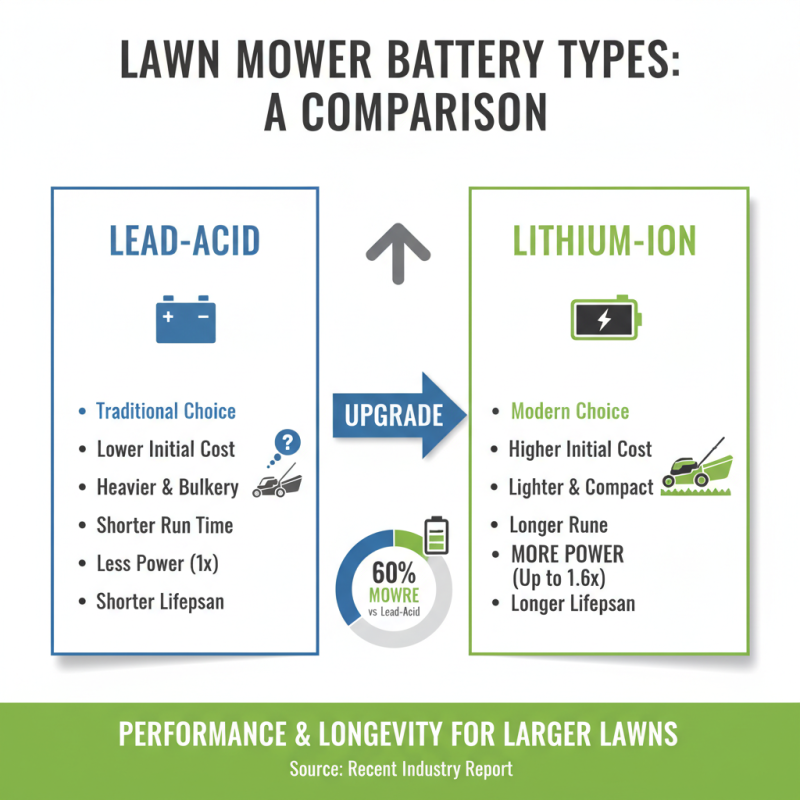
When exploring battery types for lawn mowers, enthusiasts often prioritize performance and longevity. Lithium-ion batteries have emerged as a popular choice. According to a recent industry report, these batteries can provide up to 60% more power than traditional lead-acid options. This makes them appealing for those managing larger lawns.
Another notable option is the lead-acid battery. Despite their lower energy density, they offer a cost-effective solution. However, they generally require more maintenance. Reports indicate that lead-acid batteries may only last 3-5 years, while lithium-ion can last up to 10 years. The longevity of lithium-ion batteries, though appealing, often comes with a higher initial cost.
It’s essential to recognize the trade-offs. While lithium-ion batteries charge faster, they can pose challenges in colder climates. Some users report reduced performance in extreme temperatures. Lead-acid batteries can handle lower temperatures better, yet their weight can be a drawback. This makes understanding your lawn care needs critical when choosing the right battery type.
Key Features to Consider When Choosing Lawn Mower Batteries
When selecting a lawn mower battery, several key features should be considered.
Battery type plays a significant role.
Lead-acid batteries are affordable but heavier.
Lithium-ion batteries may cost more upfront but offer longer life and lighter weight.
Understanding the differences will help you pick what suits your needs.
Another crucial feature is the voltage.
Most lawn mowers require either 12V or 24V batteries.
Ensure the battery meets the specific voltage requirement of your mower.
This ensures compatibility and optimal performance.
Battery capacity is also important. A higher amp-hour (Ah) rating usually means longer usage time before a recharge.
However, a higher capacity also means a heavier battery.
Consider your mowing habits and the size of your lawn when making this choice.
Tip: Regularly check battery terminals for corrosion.
Clean terminals can enhance battery life and performance.
Over time, neglect can lead to inefficiencies.
Also, ensure proper storage during off-seasons.
Your battery's lifespan can improve significantly with just a little care.
Best Battery Brands for Lawn Care: A 2026 Review
When considering battery options for lawn care in 2026, several brands stand out. These brands have earned recognition for their performance and reliability. Choosing the right battery means thinking about power, durability, and lifespan. Size matters too. A compact battery can fit into tight spaces, but does it provide enough juice?
It's essential to review user feedback on various battery models. Some enthusiasts praise models for their lightweight design, while others seek extended run times. However, there are always mixed opinions. Some batteries drain faster than expected during prolonged use. It’s crucial to ask, "Is this battery worth the investment?" Exploring different options can lead to unexpected disappointments.
Quality varies widely among brands. Some batteries struggle in colder temperatures. Others may not hold a charge as promised. Different environments can affect performance. Users often find one brand works well in dry climates but fails in humidity. Evaluating these aspects helps in making a more informed choice.
Comparison of Battery Performance in Electric Lawn Mowers
As electric lawn mowers gain popularity, battery performance becomes increasingly critical. A recent industry report shows that battery efficiency affects run time and cutting power significantly. High-quality batteries can offer up to 45 minutes of continuous use, which is impressive. Yet, many users report that actual performance can vary. Users may find lower run times due to factors like grass thickness or inclination.
Another important aspect is charging time. Many electric mowers take anywhere from 30 minutes to several hours to fully charge. This can lead to interruptions during lawn care. A survey noted that 23% of users experienced frustration with unexpected downtime. Battery longevity should also be considered; some models show a decline in capacity after just two years of use. This is concerning for enthusiasts who depend on reliable performance.
The environmental impact of battery disposal is another factor for reflection. While electric mowers produce no emissions during operation, end-of-life battery management requires attention. Reports suggest that approximately 25% of batteries end up in landfills. This creates a pressing need for better recycling solutions. Thus, while battery performance is vital for lawn care, one must also consider sustainability and durability in their choices.
2026 Best Mower Battery Options for Lawn Care Enthusiasts
This chart displays the battery performance of various electric lawn mowers based on their capacity (Ah) and duration (minutes) of operation. Each model is assessed for its efficiency and runtime, helping lawn care enthusiasts choose the best option for their needs.
Maintenance Tips for Extending Lawn Mower Battery Life
When it comes to lawn mower battery maintenance, small actions can make a big difference. Regularly inspect the battery for any signs of corrosion. Clean the terminals every few months using a mixture of baking soda and water. This simple task can help ensure a solid connection and prolong battery life.
Another key factor is monitoring the charge levels. Don’t let the battery discharge completely. It’s best to recharge when it hits about 30% capacity. Over-discharging can shorten battery life significantly. Additionally, store the battery in a cool, dry place during winter months. Extreme temperatures can affect battery performance.
Regular use of the mower can also affect battery health. If the mower sits idle for too long, the battery can degrade. Consider using it at least once a month to keep things running smoothly. These little habits can lead to longer-lasting performance, saving both time and money in the long run.