10 Best UPS Batteries for Reliable Power Backup Solutions?
In our increasingly digital world, power outages can disrupt daily life. Having reliable power backup solutions is essential. When it comes to ensuring uninterrupted power supply, UPS batteries play a crucial role.
UPS batteries are designed to maintain power during outages. They protect sensitive equipment from potential damage. Choosing the right UPS battery can be overwhelming. Each model offers different capacities and features. Users must consider their unique needs and preferences. The wrong choice can lead to inefficient performance.
Investing in a good UPS battery is not just about backup power. It’s about safeguarding valuable data. Countless professionals rely on technology daily. A reliable source of power can prevent data loss during critical tasks. Assessing your requirements carefully will lead to better decisions. In this article, we’ll explore ten excellent UPS batteries that promise reliable performance and peace of mind.

Understanding UPS Batteries: Key Features and Advantages
UPS batteries serve as essential tools for ensuring uninterrupted power during outages. Understanding their key features helps users select the right solution. For instance, the efficiency of these batteries is often marked by their performance rating. Studies reveal that a well-maintained UPS battery can operate at around 85% efficiency. However, many users overlook maintenance, which can lead to a significant drop in battery life and performance over time.
Another critical feature to consider is the battery type. Valve-regulated lead-acid (VRLA) batteries dominate the market, accounting for nearly 60% of sales globally. They offer reliable performance but are sensitive to temperature fluctuations. Lithium-ion batteries, while newer to this space, are gaining popularity due to their longer lifespan and reduced weight. Yet, they come at a higher initial cost, making the decision more complex for some users.
Users must also think about runtime. The ability to support critical devices relies heavily on battery capacity. A report indicates that most UPS systems offer between 10 to 30 minutes of power. This timeframe may seem trivial during an outage, urging users to assess their actual needs. Overestimating runtime can lead to inadequate solutions, leaving essential equipment vulnerable. Understanding these nuances ensures better preparedness and enhances overall power backup strategies.
Top 10 UPS Batteries: Performance Comparison
Factors to Evaluate When Choosing UPS Batteries
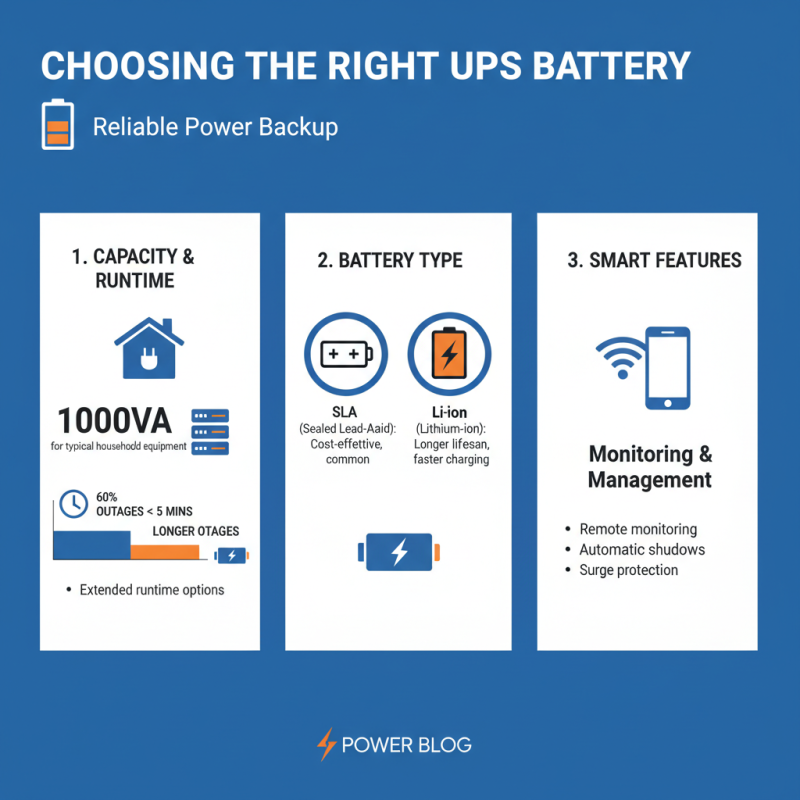
Choosing the right UPS battery is crucial for ensuring reliable power backup. When evaluating options, consider capacity and runtime. A typical household may require a UPS with at least 1000VA to sustain important equipment. Data from industry reports indicate that approximately 60% of power outages last less than five minutes. However, longer outages can occur, and you may need a UPS that supports extended runtimes.
Another important factor is the battery type. Lead-acid batteries are common, but lithium-ion batteries offer advantages. They have a longer lifespan and charge faster. Reports show that lithium-ion can last up to 10 years compared to lead-acid’s 3-5 years. However, these batteries come at a higher price. Users should weigh the initial cost against long-term benefits.
Finally, regularly assessing battery health ensures reliability. A common mistake is neglecting battery maintenance. Most users underestimate the significance of regular tests. Testing every few months can prevent surprise failures. A study shows that 30% of UPS failures are due to battery issues. This highlights the need for continuous evaluation and proper care.
Maintenance Tips for Extending UPS Battery Life
Maintaining your UPS battery is crucial for a reliable power backup. A well-cared battery lasts longer and works better. Regular checks can prevent unexpected failures.
Here are some tips to extend your UPS battery life. Keep the battery clean and free of corrosion. Dust can create resistance and affect performance. Check connections regularly. Loose connections can cause energy loss and reduce efficiency.
Temperature matters too. Extreme heat or cold can shorten battery life significantly. Store your UPS in a controlled environment, ideally between 20 to 25 degrees Celsius. Overcharging also harms batteries. Avoid leaving your UPS plugged in all the time. Instead, charge when necessary and unplug when full.
Consider running self-tests occasionally. They help ensure the system works correctly. Remember, your battery may not show signs of wear right away. Regular maintenance saves you from sudden power outages.
Comparative Review of the 10 Best UPS Batteries Available Today
Choosing the right UPS battery can feel overwhelming. With so many options available, it’s important to evaluate each one carefully. Look for batteries that provide reliable energy during outages. The best ones feature efficient charging mechanisms and strong performance. Many users appreciate the peace of mind that comes with dependable backup solutions.
In our review, several key attributes stand out. The lifespan of a battery is crucial, as shorter lifespans can lead to frequent replacements. Additionally, the recharge time is something to consider. A battery that charges quickly can be invaluable during emergencies. Some options also offer additional features, like software integration for monitoring performance.
However, not all batteries are perfect. Some may have limited warranties or compatibility issues with existing systems. Users often report their struggle to find a battery that suits all their needs. Evaluating power capacity alongside physical size is essential too. It's a delicate balance that requires thoughtful consideration and ongoing reflection on what truly matters for your environment.
10 Best UPS Batteries for Reliable Power Backup Solutions
| Model |
Capacity (Ah) |
Voltage (V) |
Runtime (minutes) |
Weight (lbs) |
Warranty |
| Model A |
12 |
12 |
45 |
20 |
1 Year |
| Model B |
7 |
12 |
30 |
15 |
6 Months |
| Model C |
9 |
12 |
40 |
18 |
1 Year |
| Model D |
10 |
24 |
60 |
22 |
1.5 Years |
| Model E |
15 |
12 |
75 |
25 |
2 Years |
| Model F |
20 |
12 |
90 |
30 |
3 Years |
| Model G |
12 |
12 |
50 |
21 |
1 Year |
| Model H |
10 |
12 |
35 |
17 |
6 Months |
| Model I |
8 |
12 |
25 |
14 |
1 Year |
| Model J |
14 |
24 |
80 |
28 |
2 Years |
| Model K |
18 |
12 |
70 |
26 |
1.5 Years |