
How to Choose a Stainless Valve Stem in 2026?
Choosing a Stainless Valve Stem in 2026 requires more than comparing prices or polished surfaces. The decision affects sealing stability, torque, maintenance time, and process safety. Fortune Business Insights estimated the global industrial valves market at USD 77.94 billion in 2023, with continued growth expected through 2032. Grand View Research also identifies energy, chemical processing, water treatment, and pharmaceuticals as important demand sectors. These figures describe industrial valves broadly. They do not isolate valve stems. That limitation matters.
A practical selection begins with service conditions. Check media chemistry, operating temperature, pressure cycles, stem diameter, thread design, and actuator load. Stainless steel grades are not interchangeable. 316 stainless steel may resist chlorides better than 304, while hardened alloys can improve wear resistance in frequent-cycle applications. API 600, API 623, ASTM A276, and ISO 5211 may support evaluation, depending on the complete valve assembly.
Richard W. Greene, author of Valve Handbook, expressed a useful engineering principle: “Valve selection is a system decision, not a catalog decision.” The wording remains relevant. A stem that looks excellent can still gall, seize, or deform under real operating conditions. Small details matter. Surface finish matters. Lubrication compatibility matters.
This guide explains how to choose a Stainless Valve Stem for modern industrial service. It compares materials, dimensions, coatings, corrosion resistance, and supplier evidence. It also questions a common assumption: higher alloy content does not automatically deliver better performance. Verify test records, traceability, and application history before approval. A careful choice may cost more initially, but an avoidable shutdown costs considerably more.
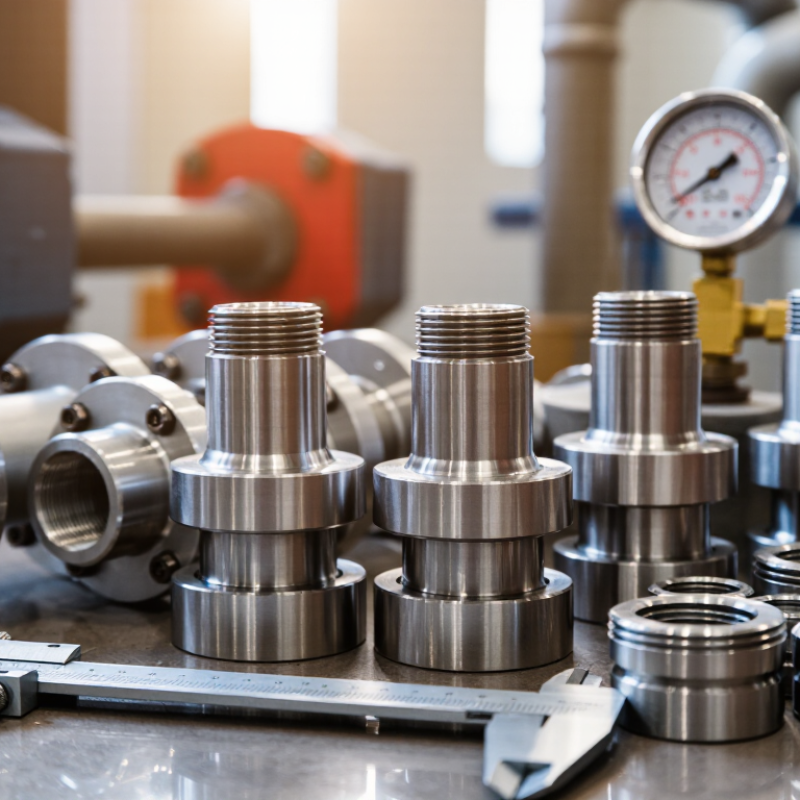
What Is a Stainless Valve Stem and Why Does Material Matter?
How to Choose a Stainless Valve Stem in 2026?
A stainless valve stem is the metal shaft that transfers motion to the valve closure. It may look simple, but its material controls service life, friction, and sealing reliability. Stainless steel contains chromium, which forms a thin protective oxide film. That film can rebuild after minor surface damage. It is not magic.
The material choice becomes critical in water, chemical, and coastal systems. NACE’s IMPACT study estimated global corrosion costs at about $2.5 trillion annually, equal to nearly 3.4% of global GDP. The International Stainless Steel Forum also reported approximately 58 million metric tonnes of stainless steel production in 2023. These figures show the material’s industrial importance, not automatic suitability. Grade 304 often suits general indoor service. Grade 316 offers stronger resistance to chlorides because it contains molybdenum. Yet even 316 can pit in stagnant seawater. A polished stem may still fail.
Tips: Check chloride levels, temperature, pressure, and cycle frequency before selecting a grade. Confirm hardness and surface finish against the packing material. Inspect threads and sealing areas, not only the visible stem. Ask for mill certificates and corrosion-test records. Small documentation gaps can become expensive problems. My practical view is cautious: selecting by “stainless steel” alone is incomplete, and real operating conditions deserve more attention.
| Selection Dimension | Why It Matters | Common Stainless Material Options | Typical Material Characteristics | Recommended Use Conditions | Important Limitations |
|---|---|---|---|---|---|
| General corrosion resistance | A valve stem is exposed to moisture, process fluids, packing friction and atmospheric contaminants. Corrosion can increase operating torque and cause leakage. | 304 stainless steel | Chromium-nickel stainless steel with broad general-purpose corrosion resistance. | Indoor water service, general industrial fluids, clean air and mildly corrosive environments. | Less resistant than 316 stainless steel to chloride-rich environments and coastal exposure. |
| Chloride and marine exposure | Chloride ions can promote pitting and crevice corrosion, particularly where moisture remains trapped around the stem or packing. | 316 stainless steel | Molybdenum-bearing stainless steel offering better resistance to chloride-related localized corrosion than 304. | Coastal installations, salt-contaminated water, chemical processing areas and outdoor equipment. | It is not immune to pitting or stress-corrosion cracking in severe chloride, high-temperature or stagnant conditions. |
| High mechanical strength | The stem must withstand actuator load, packing friction, repeated cycling and possible shock without permanent deformation. | 17-4 PH stainless steel | Precipitation-hardening stainless steel that can achieve substantially higher strength than common 304 or 316 grades after heat treatment. | High-cycle valves, compact stems, high actuator loads and applications requiring strong resistance to mechanical wear. | Corrosion resistance depends on heat-treatment condition and environment; it should not automatically replace 316 in severe chloride service. |
| Wear and galling control | Repeated metal-to-metal contact can cause adhesive wear, known as galling, especially under load, poor lubrication or slow sliding motion. | Hardened stainless steel, surface-treated stainless steel or an engineered stem-and-nut material pairing | Surface hardness, finish, lubrication and dissimilar-material pairing can be as important as the base alloy. | Frequently cycled valves, rising-stem designs and assemblies with high contact pressure. | Using identical stainless mating surfaces without suitable design or lubrication may increase galling risk. |
| Temperature capability | Temperature affects strength, oxidation resistance, thermal expansion, packing performance and lubricant life. | 304 or 316 stainless steel for many moderate-temperature services; heat-resistant alloy selection for more severe conditions | The practical temperature limit is controlled by the complete valve assembly, including packing, seals, lubricant and pressure rating. | Choose the stem grade together with the valve pressure-temperature rating and the sealing system. | Do not use a material grade alone to establish a safe operating temperature. Consult the applicable valve standard and manufacturer data. |
| Chemical compatibility | Acids, alkalis, solvents, oxidizers and process contaminants can attack stainless steel differently depending on concentration and temperature. | 304 or 316 for compatible general service; specialized alloys for highly aggressive media | 316 generally provides better resistance than 304 in many chloride-containing environments, but neither grade is universally compatible. | Review the exact chemical, concentration, temperature, aeration and exposure time before selecting the stem. | Strong reducing acids, hot concentrated chemicals and mixed contaminants may require a different alloy or protective design. |
| Hygiene and cleanability | Smooth, corrosion-resistant surfaces help reduce contamination retention and simplify cleaning in sanitary equipment. | 304 or 316 stainless steel with a suitable surface finish | Material grade, surface roughness, geometry, weld quality and clean-in-place compatibility all affect hygienic performance. | Food, beverage, pharmaceutical and clean-process equipment where the complete construction meets sanitary requirements. | A stainless grade alone does not make a valve hygienic; surface finish and applicable sanitary requirements must also be confirmed. |
| Magnetic response | Magnetism may matter in inspection, instrument compatibility or specialized process environments. | 304 and 316 austenitic stainless steel; 17-4 PH martensitic stainless steel | Annealed 304 and 316 are generally non-magnetic or weakly magnetic, while 17-4 PH is typically magnetic. | Confirm the magnetic behavior when the valve is installed near sensitive instruments or within controlled inspection processes. | Cold working can increase the magnetic response of 304 and 316, so the final component condition matters. |
| Manufacturing and dimensional fit | Stem straightness, thread accuracy, surface finish and dimensional tolerances directly affect sealing, torque and service life. | Any selected stainless grade, provided it is compatible with the manufacturing process | Correct geometry and finish are essential for packing contact, actuator connection and smooth valve operation. | Specify stem diameter, thread form, length, runout, surface roughness, hardness and connection details. | A corrosion-resistant alloy cannot compensate for incorrect dimensions, poor machining or unsuitable surface finish. |
| Maintenance and inspection | Regular inspection can identify pitting, scoring, thread damage, discoloration, packing leakage and abnormal operating torque. | All stainless stem materials | Stainless steel reduces corrosion risk but does not eliminate mechanical wear, deposits or seal deterioration. | Include torque checks, visual inspection, cleaning and packing or seal replacement in the maintenance plan. | Do not rely on appearance alone; small pits, galling and subsurface damage may affect operation before visible failure. |