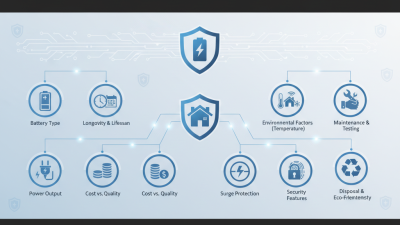
Choosing an alarm battery supplier is not simply a price comparison. Global buyers need dependable starting power, stable standby performance, and predictable service life. A weak battery can leave a control panel silent when a sensor activates. That risk deserves more attention.
David Linden, a respected battery engineer and editor of Handbook of Batteries, offers a useful principle: “Battery performance must be judged in its application, not in isolation.” This idea guides our review of China’s leading alarm battery manufacturers. Their products are compared through chemistry, capacity consistency, cycle behavior, leakage resistance, production controls, certifications, customization, and export experience.
Small details matter. A 12V sealed lead-acid battery may look identical across several catalogs, yet its plate design, separator quality, and valve regulation can differ significantly. Temperature also changes the result. A battery tested in a cool laboratory may perform differently inside a hot security cabinet.
This guide focuses on manufacturers that serve international alarm, access-control, fire, and backup-power markets. It considers factory capability, documented testing, packaging quality, minimum order requirements, and communication reliability. Some companies may appear less impressive because public information is limited. That is worth noting, not ignoring.
No ranking is perfect. Supplier data can change, and laboratory claims do not replace field experience. Buyers should still request current datasheets, sample units, inspection records, and warranty terms before placing large orders. The following top ten list provides a practical starting point for evaluating China-based alarm battery partners with clearer expectations and fewer costly surprises.
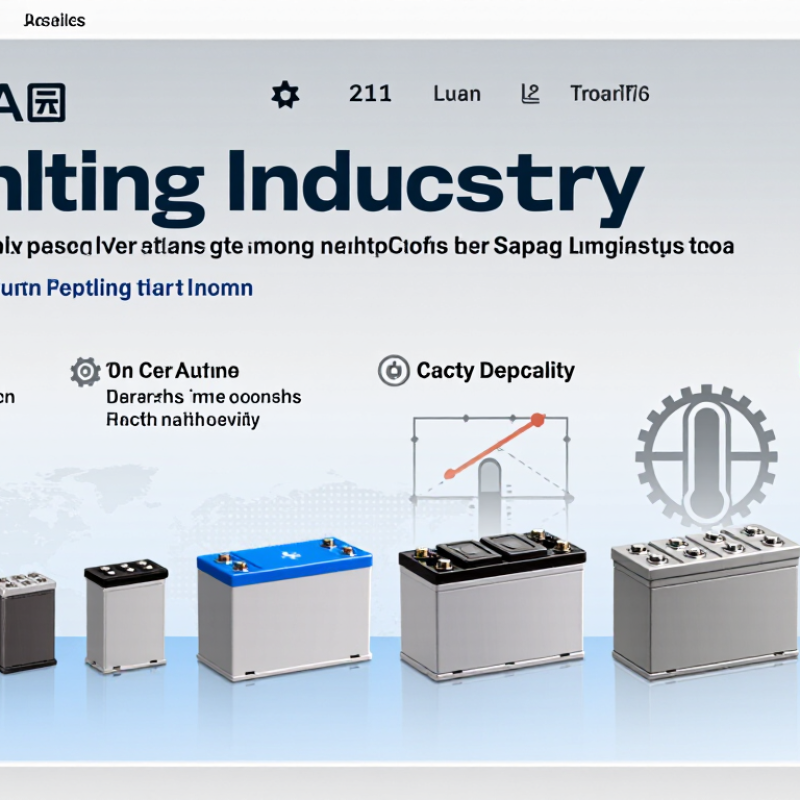
A reliable alarm battery manufacturer in China should prove performance beyond a clean product catalogue. Practical audits often reveal differences in testing discipline. A serious factory records capacity, internal resistance, float voltage, and temperature behavior for every production batch. These details matter because an alarm battery may remain idle for years, then support a critical event. Fortune Business Insights valued the global lead-acid battery market at about USD 50 billion in 2023. That scale increases supply options, but it does not guarantee dependable quality.
Look for compliance with relevant standards, such as IEC 60896 for stationary lead-acid batteries and ISO 9001 for quality management. For lithium products, transport testing under UN 38.3 is also important. Ask for recent test reports, not copied certificates. A trustworthy manufacturer should explain the test method, discharge rate, sampling plan, and failure limits. It should also provide traceable date codes and control electrolyte, sealing, and terminal torque. Small details matter. Weak documentation is a warning.
Tips: Request three recent batch reports and compare their values. Confirm capacity at the stated 20-hour rate. Check warranty terms, storage limits, and replacement procedures. Inspect a sample after long storage, if possible. Do not rely only on price. I have seen technically attractive quotations hide inconsistent backup time. That weakness is easy to miss before shipment. Independent pre-shipment testing adds cost, but often prevents larger losses.
China’s alarm battery industry supports global buyers through scale, engineering flexibility, and increasingly disciplined quality control. The top ten manufacturers typically serve security panels, wireless sensors, emergency lighting, and access systems. Their factories can adjust voltage, capacity, terminals, packaging, and discharge performance for different equipment. This matters when a battery must fit a narrow compartment or maintain power during a winter outage.
Practical sourcing begins with technical evidence, not attractive quotations. Buyers should request datasheets, sample testing, production records, and batch traceability. Reliable manufacturers usually explain cell chemistry, operating temperature, shelf life, and safety controls clearly. Relevant testing should match the product and destination market. Quality systems, inspection reports, and transport documentation also reduce avoidable delays. Small details matter. A loose connector can disable an entire alarm circuit.
China’s supplier network also helps buyers manage volume changes. Manufacturers may support pilot orders before larger production, although minimum quantities vary. Communication is not always perfect. Specifications can be translated poorly, and performance claims require independent verification. Buyers should compare tested capacity rather than printed capacity alone. They should also confirm carton protection, moisture control, and replacement procedures. A lower unit price can become expensive after premature failures, returns, or emergency servicing. Clear agreements and periodic inspections create more dependable cooperation.
The leading ten Chinese alarm battery manufacturers differ mainly in product capability, not factory size. Experienced suppliers usually offer sealed lead-acid, lithium, and nickel-metal hydride batteries. Each type supports different alarm systems, temperatures, and service cycles.
Strong manufacturers provide stable voltage, low self-discharge, and secure terminals. They also manage capacity testing on every production batch. I have found that practical details matter. A battery may pass a laboratory test but perform poorly in a cold warehouse. Some factory claims also need closer checking.
Tips: Ask for discharge curves, cycle data, safety reports, and sample testing records. Confirm dimensions before discussing price. Request the same battery after storage for several months. This often reveals weak quality control.
Top suppliers normally support OEM dimensions, connector changes, printed labels, and carton protection. Their engineering teams should explain standby time using real load conditions. They should also provide traceability from raw materials to finished units.
For global buyers, export experience helps with documentation and shipping preparation. However, product capability can vary between models from the same factory. Do not judge every battery by one successful sample. I have made that mistake.
A dependable supplier should communicate limits clearly. Ask about operating temperature, expected service life, replacement intervals, and warranty handling. Independent inspection can strengthen confidence before a large order.
Reliable performance comes from repeatable testing, not polished sales language.
When selecting China’s top ten alarm battery manufacturers, global buyers should compare evidence, not catalog promises. Alarm backup batteries often use VRLA lead-acid cells, where stable float performance matters more than headline capacity. Ask for capacity results at 20-hour discharge, internal-resistance readings, and retained capacity after aging. Small details matter. A 2024 report from Grand View Research valued the global lead-acid battery market at over USD 50 billion, showing intense competition but not equal reliability.
Certifications need careful reading. IEC 60896-21 and IEC 60896-22 testing can indicate performance for valve-regulated stationary batteries. UL 1989 may support suitability for standby applications in relevant markets. ISO 9001 concerns quality management, not battery performance itself. Request current certificates, test reports, calibration records, and sample traceability. The International Energy Agency reports that battery supply chains remain geographically concentrated, so buyers should also inspect material controls and backup sourcing. Certificates alone are not enough.
Production capacity should be measured through verified monthly output, tested units, and realistic lead times. Ask whether stated capacity includes raw cells, assembly, or final inspection. Review factory audit results, lot rejection rates, and warranty data from comparable orders. A 2023 Allied Market Research report projected steady growth in the global lead-acid battery market through 2032, but forecasts can hide uneven factory discipline. I would test pilot batches before signing a large contract. That step costs time. It can expose weak seals, inconsistent terminals, or inflated capacity claims early.
Buyer evaluation weighting: quality, certifications, production capacity, reliability, and export readiness
The chart presents a practical scoring framework for comparing manufacturers without displaying company or brand data. Quality systems and certifications receive the highest weighting because global buyers commonly verify ISO 9001, ISO 14001, UL, CE, IEC, RoHS, and transport-compliance documentation. Production capacity, cycle-life consistency, warranty support, and export experience should be validated through factory audits, test reports, and shipment records.
Choosing among China’s top alarm battery manufacturers requires more than comparing quotations. Grand View Research estimated the global battery market at about USD 134.6 billion in 2023, with continued double-digit growth expected. This scale creates more suppliers, but not always better quality. Ask for production dates, cell traceability, cycle-test records, and certificates matching your target market. For standby alarms, verify compliance with relevant IEC standards, including IEC 60896 for stationary lead-acid batteries. Check whether the supplier tests capacity at the declared temperature, not only in ideal laboratory conditions.
Reliability appears in small details. A 12V 7Ah battery should have clear terminal markings, sealed packaging, and stable performance after storage. Request sample testing after three to six months. Also examine internal resistance, float-charge behavior, leakage controls, and warranty terms. The International Energy Agency reported that global battery demand reached around 750 GWh in 2023, mainly driven by electric vehicles. This shows a strong supply chain, but alarm batteries need different priorities: long standby life, predictable discharge, and low maintenance. A common mistake is accepting a higher Ah rating without checking actual discharge curves.
Tips: Compare three samples, not three brochures. Ask for an independent test report. Confirm the minimum order quantity and replacement policy in writing. Factory audits can reveal weak process control, although even a good audit cannot predict every shipment problem. Price still matters, but it should not lead the decision.
Buyer comparison table: The manufacturers are shown as anonymized supplier profiles so buyers can compare capabilities without relying on company or brand names. Product ranges, service-life figures, certifications, and test reports should be verified against the exact SKU and current factory documentation.
| Rank | Anonymized Supplier Profile | Main Manufacturing Region | Alarm Battery Focus | Common Voltage and Capacity | Battery Technology | Typical Standby Design Life* | Operating Temperature** | Standards or Documents to Request | Best Fit for Global Buyers |
|---|---|---|---|---|---|---|---|---|---|
| 1 | Profile A — high-volume OEM/ODM producer | Pearl River Delta | Security panels, intrusion alarms, access control, emergency lighting | 6V/4.5Ah; 12V/4.5Ah; 12V/7Ah; 12V/9Ah | Sealed AGM lead-acid | Approximately 3–5 years | Approximately −15°C to 50°C | IEC 60896 test evidence, safety data sheet, capacity test, UN38.3 if lithium is offered | Large distributors requiring stable monthly supply |
| 2 | Profile B — industrial standby specialist | East China coastal manufacturing belt | Alarm control units, fire panels, telecom backup | 12V/7Ah; 12V/9Ah; 12V/12Ah; 12V/18Ah | AGM and front-terminal AGM | Approximately 3–5 years | Approximately −15°C to 50°C | IEC 60896, ISO 9001 certificate, production date traceability, internal-resistance report | Professional security integrators and panel makers |
| 3 | Profile C — cost-efficient export manufacturer | Central China | Residential alarms, access systems, small UPS units | 6V/4Ah; 6V/4.5Ah; 12V/4.5Ah; 12V/7Ah | General-purpose AGM | Approximately 3–5 years | Approximately −10°C to 45°C | Capacity-at-rate report, valve-regulated design confirmation, carton and pallet specification | Price-sensitive importers with standard specifications |
| 4 | Profile D — deep-cycle and GEL battery producer | Northern China | Outdoor alarm systems, remote monitoring, solar-supported security | 12V/7Ah; 12V/12Ah; 12V/18Ah; 12V/33Ah | GEL and deep-cycle VRLA | Approximately 5–8 years | Approximately −20°C to 50°C | Deep-cycle test data, float-charge specification, low-temperature performance report | Projects requiring longer backup or frequent discharge cycles |
| 5 | Profile E — lithium backup system specialist | Southwest China | Wireless alarm hubs, remote security cabinets, long-backup systems | 12.8V/6Ah; 12.8V/10Ah; 12.8V/20Ah | LiFePO₄ with battery-management system | Approximately 8–10 years, application-dependent | Typically 0°C to 45°C for charging | UN38.3, IEC 62619 or applicable battery standard, MSDS, BMS protection parameters | Buyers prioritizing low weight and reduced replacement frequency |
| 6 | Profile F — private-label customization supplier | Yangtze River Delta | Private-label alarm batteries and replacement packs | 6V/4.5Ah; 12V/4.5Ah; 12V/7Ah; 12V/9Ah | AGM; selected GEL options | Approximately 3–5 years | Approximately −15°C to 50°C | Artwork approval, barcode traceability, lot inspection report, packaging compliance | Importers needing custom labels and mixed packaging |
| 7 | Profile G — compact-format battery manufacturer | Fujian coastal region | Small alarm panels, access readers, control accessories | 4V/1.2Ah; 6V/1.3Ah; 6V/4.5Ah; 12V/1.3Ah | Compact AGM | Approximately 3–5 years | Approximately −10°C to 45°C | Dimensional drawing, terminal layout, discharge curve, leakage and vibration test data | Equipment makers with restricted battery compartments |
| 8 | Profile H — high-temperature application supplier | South China | Outdoor cabinets, industrial alarms, commercial security systems | 12V/7Ah; 12V/9Ah; 12V/18Ah; 12V/26Ah | Heat-tolerant AGM and GEL | Approximately 3–5 years, temperature-dependent | Approximately −20°C to 55°C | High-temperature float test, thermal-runaway controls, charging-voltage guidance | Warm-climate installations and non-air-conditioned sites |
| 9 | Profile I — export logistics and mixed-SKU supplier | Eastern China | Replacement batteries for distributors and service networks | 6V/4.5Ah; 12V/4.5Ah; 12V/7Ah; 12V/12Ah | AGM and selected GEL models | Approximately 3–5 years | Approximately −15°C to 50°C | Country-of-origin documents, export packaging test, pallet configuration, shelf-life policy | Buyers ordering multiple standard sizes in one shipment |
| 10 | Profile J — project and small-batch OEM supplier | Central and South China | Custom alarm systems, pilot projects, replacement packs | 12V/2.3Ah; 12V/4.5Ah; 12V/7Ah; 12V/9Ah | AGM; lithium options subject to project design | Approximately 3–5 years for AGM | Approximately −10°C to 45°C | Engineering drawing, sample approval record, change-control procedure, final inspection report | Buyers needing engineering support or lower initial order quantities |
Selection checklist for global buyers
* Design life is a general industry range under controlled standby conditions and is not a guaranteed field-life claim. **Temperature ranges vary by model; charging and discharging limits must be confirmed from the product datasheet.