Best Sealed Lead Acid Battery Manufacturers in China

China remains a major manufacturing base for sealed lead acid batteries, serving telecommunications, emergency power, security systems, medical equipment, and renewable-energy installations. These applications demand stable performance, not merely low prices. A battery may sit quietly for months, then support a server rack within seconds. That detail changes the buying decision.

Industry evidence supports careful supplier evaluation. The Battery Council International reports that lead batteries remain central to global rechargeable energy storage and automotive starting systems. Fortune Business Insights estimates that the global lead-acid battery market will continue expanding through the decade, supported by backup power and transportation demand. Meanwhile, China’s established battery supply chain offers advantages in production scale, component sourcing, and export experience. However, market size does not prove product quality.

This guide examines the best sealed lead acid manufacturers in China through practical and verifiable criteria. These include factory capability, ISO management systems, product certifications, cycle-life testing, discharge performance, warranty terms, and after-sales support. It also considers whether a supplier provides clear datasheets, traceable production batches, and realistic technical guidance. Reports from Grand View Research and MarketsandMarkets show continued demand for valve-regulated lead-acid technology, especially in backup power and industrial applications. Still, published forecasts can differ. No ranking is perfect. Buyers should verify claims through samples, inspection records, and application-specific tests before signing contracts. A reliable manufacturer should explain float voltage, operating temperature, terminal design, and recycling procedures without hiding limitations. That transparency often matters more than a polished catalogue.
Best Sealed Lead Acid Battery Manufacturers in China

What Defines a Sealed Lead Acid Battery Manufacturer

A sealed lead acid battery manufacturer is defined by more than its ability to assemble cells. The work begins with consistent plate production, controlled paste application, and reliable formation charging. These steps influence capacity, internal resistance, and service life. A capable factory also monitors sealing quality, electrolyte retention, and valve performance. Small process variations matter. A battery that looks sound may still perform poorly if its plates or seals are inconsistent.

Manufacturers should verify products through documented capacity, discharge, and cycle testing. Clear specifications help buyers match batteries to standby systems, alarms, or mobility equipment. Traceability is useful too: production batches should connect to inspection records and test results. Ask how the factory handles rejected units and changing raw-material batches. Answers may reveal more than a polished brochure. No test predicts every field condition, and that uncertainty deserves attention.

Tips: Request recent test data for the exact model, not just a general product sheet. Check charging recommendations, storage limits, and warranty terms. A practical sample test can expose issues, though one sample cannot prove long-term consistency.

Key Manufacturing Regions and Industry Capabilities in China

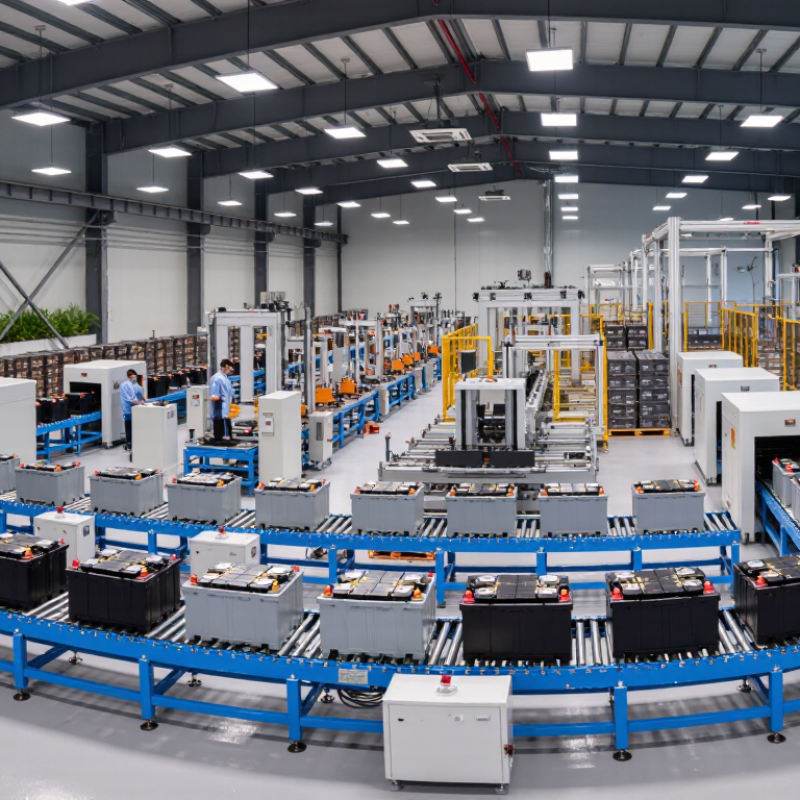
China’s sealed lead-acid battery industry is concentrated in coastal manufacturing belts, especially Zhejiang, Jiangsu, Guangdong, and Shandong. These regions benefit from established component suppliers, skilled production teams, and access to ports. A factory visit may reveal the difference between a polished showroom and the real production floor.

Capabilities vary by manufacturer. Some facilities focus on small standby batteries for alarms and backup power, while others produce larger units for telecommunications cabinets or industrial equipment. Look for controlled plate formation, consistent electrolyte filling, and clear inspection records. These details matter more than impressive equipment alone. Still, regional reputation is not proof of quality; individual factories can differ, sometimes more than buyers expect.

Tips: Ask for recent capacity, cycle-life, and leak-test data from the exact model you plan to purchase. Check how the supplier handles batch traceability and packaging for transport. Request samples when practical. A neat report helps, but it should match the battery in your hands.

Leading Chinese Sealed Lead Acid Battery Manufacturers

Leading Chinese sealed lead acid battery manufacturers serve applications ranging from backup power systems to mobility equipment. Their capabilities may include plate production, cell assembly, formation, and final testing. A controlled process matters. It can help keep capacity and dimensions consistent across production batches.

When evaluating a manufacturer, buyers should ask for rated capacity, discharge conditions, cycle-life test methods, and operating temperature limits. These details make product comparisons more meaningful. Factory quality checks may include voltage measurement, leak inspection, and sample discharge testing. Ask how test records are retained and how defects are handled. A polished specification sheet alone is not enough.

Production scale is useful, but it does not guarantee a suitable battery. The right design depends on load, charging behavior, installation space, and expected service conditions. For example, a standby unit in a cool equipment room faces different demands from a battery exposed to daily cycling. Trade-offs remain. Some buyers focus heavily on upfront cost and later discover that maintenance or replacement planning was overlooked. Requesting sample data and discussing the actual duty cycle can reveal gaps before an order is placed.

Product Types, Certifications, and Technical Strengths

China’s sealed lead-acid battery manufacturers typically offer AGM and gel models, with options for standby power, deep cycling, and front-terminal installation. AGM batteries suit compact UPS cabinets, where vibration resistance and low maintenance matter. Gel designs can perform well in repeated cycling, though charging settings must match the battery specification. Details matter.

Certifications vary by product and export market. Buyers may encounter IEC 60896 test references, UL recognition, or CE documentation, but these are not interchangeable guarantees. Check that certificates and test reports identify the exact model, factory, and applicable standard. A document for one battery series may not cover another. That distinction is easy to miss.

Technical capability is clearer in measurable production controls. Reliable factories monitor lead-alloy composition, plate curing, electrolyte filling, sealing, and final capacity testing. Ask for discharge data at stated temperatures, expected cycle life under defined depths of discharge, and internal resistance results. These figures help compare products fairly. They do not remove every uncertainty: real service life also depends on charging quality, heat, and maintenance. Even a strong datasheet cannot predict every installation.

How to Evaluate and Select a Reliable Manufacturer

Choosing a sealed lead acid battery manufacturer in China takes more than comparing unit prices. Start by checking whether the supplier explains its production process clearly, from plate assembly to final charging and inspection. Ask how capacity is tested, at what temperature, and under what discharge conditions. A test report without those details is hard to assess. Small details matter.

Review consistency across batches, not just one sample. Request records for voltage, capacity, internal resistance, and visual inspection, then compare them with the specifications you need. If possible, evaluate samples under your actual load and charging setup. A battery that performs well in a showroom may behave differently in a warm equipment cabinet or during frequent cycling. That difference is worth investigating.

A reliable manufacturer should provide traceable production information, clear warranty terms, and practical guidance on storage and charging. Notice how technical questions are handled: precise answers build confidence, while vague promises deserve follow-up. Factory visits or independent inspections can help verify equipment and quality controls. Still, no checklist removes every risk. I would also note any unanswered questions, even when the sample looks good.

Best Sealed Lead Acid Battery Manufacturers in China: How to Evaluate and Select a Reliable Manufacturer

Evaluation Dimension What to Check Reliable Evidence Why It Matters Suggested Buyer Action
Product Range Availability of AGM and gel VRLA batteries, capacities, terminal types, and product formats such as general-purpose, deep-cycle, and high-rate models. Current datasheets listing nominal voltage, capacity, dimensions, weight, terminal type, and intended application. A suitable range makes it easier to match batteries to UPS, alarm, emergency-lighting, telecom, or cyclic-duty requirements. Compare specifications against the actual load, backup time, operating temperature, and installation space.
Standards and Certifications Whether products and manufacturing systems are tested or certified for relevant markets and applications. Certificates with identifiable issuing bodies, scope, validity dates, and model coverage; test reports for the specific battery series. Certification can support compliance, but a certificate alone does not prove that every model or shipment meets the required performance. Verify documents with the issuer and confirm that the exact model and factory location are included.
Performance Data Capacity rating conditions, discharge curves, internal resistance, cycle-life test conditions, and standby design-life assumptions. Model-specific test data that states temperature, discharge rate, end voltage, charge method, and test procedure. Battery life and usable capacity vary significantly with temperature, discharge depth, charge settings, and operating profile. Request data for the intended duty cycle and compare test conditions rather than relying on headline figures.
Quality Control Incoming-material inspection, process controls, formation and charging procedures, final testing, and batch traceability. Documented inspection plans, sample production records, test reports, and a clear process for identifying production lots. Consistent controls help reduce variation between batteries and make defects easier to investigate. Ask for a quality-control overview and agree on acceptance criteria before placing a production order.
Factory Capability Production capacity, equipment, workforce, in-house testing, and ability to handle the requested model and order volume. A live factory assessment, recent production evidence, equipment details, and a realistic production schedule. Trading and manufacturing capabilities differ; capacity and process control affect lead times and repeat-order consistency. Confirm the manufacturing site and assess whether its equipment and capacity fit the required specification and volume.
Customization and Engineering Options for terminals, dimensions, labels, packaging, connectors, and application-specific design requirements. Approved drawings, prototype samples, engineering change records, and written confirmation of production tolerances. Uncontrolled changes can affect fit, electrical connections, safety, and compatibility with existing equipment. Freeze the approved specification and sample before mass production; require written approval for subsequent changes.
Safety and Transport Valve-regulated construction, battery handling instructions, packaging, and applicable transport documentation. Product safety documentation, packaging specifications, and shipment documents appropriate to the destination and transport mode. Lead-acid batteries are heavy and require correct handling; transport and import requirements depend on product classification and route. Confirm requirements with the carrier and local authorities before shipment, especially for international orders.
Warranty and After-Sales Support Warranty period, claim conditions, exclusions, response times, and technical support arrangements. A written warranty stating coverage, required evidence, claim process, and responsibility for freight or replacement costs. A clear, practical remedy is more useful than a long warranty term with ambiguous conditions. Agree on claim procedures and retain serial, batch, installation, and operating records.
Commercial Reliability Quotation clarity, payment terms, lead time, minimum order quantity, packaging details, and change-control procedures. A detailed pro forma invoice, agreed specification, production schedule, and written terms for inspection and delivery. Clear commercial documents reduce misunderstandings about product configuration, delivery, and acceptance. Compare total landed cost, including freight, duties, inspection, and expected service requirements—not unit price alone.
Supplier Verification Legal business identity, operating history, factory address, export experience, and consistency of information across documents. Business registration records, independently verified contact details, factory visit or third-party audit, and references where available. Verification helps distinguish a capable manufacturing operation from an intermediary whose role or control over production is unclear. Cross-check company and factory details independently and use a pre-shipment inspection for significant orders.