Why Choose Lead Acid Battery for Your Power Needs?
When considering power solutions, the choice of battery technology is crucial. A lead acid battery stands out as a reliable option. This type of battery has been in use for decades, providing dependable energy storage for various applications. Its design allows for both deep cycling and steady discharging, making it a versatile choice.
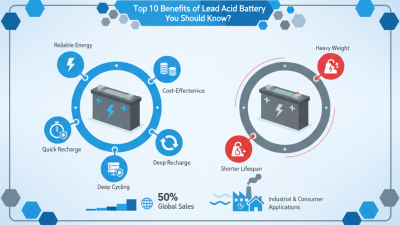
Many professionals recommend lead acid batteries for their robust performance and cost-effectiveness. They are extensively used in automotive, renewable energy, and backup power systems. Despite some flaws, like weight and lifespan, their proven durability makes them a trusted choice.
While lithium-ion batteries gain popularity, lead acid batteries offer benefits that are hard to overlook. Their ability to withstand harsh conditions and provide reliable power makes them suitable for diverse environments. Understanding these essential characteristics helps you decide if a lead acid battery meets your specific power needs.

Understanding Lead Acid Batteries: A Comprehensive Overview
Lead acid batteries have been a staple in energy storage for many years. Their design is straightforward. They utilize lead and acid to create a chemical reaction, generating electrical power. This simplicity is one of their key advantages. Lead acid batteries are reliable and cost-effective for various applications.
The performance of these batteries is well-documented. They can deliver high surge currents, making them ideal for starting engines. However, they have a limited cycle life compared to newer technologies. Users often find themselves needing replacements sooner than expected. Maintenance can also be a factor, as they require periodic checks. Despite these downsides, their ability to perform under heavy loads is commendable.
Using lead acid batteries can be a practical choice for many. They are widely available and easily recyclable. However, it's essential to consider their weight and size. Transporting them can be cumbersome. Users should also reflect on their energy needs regularly. Each application may require a different energy storage solution.
Key Advantages of Lead Acid Batteries for Various Power Applications
Lead acid batteries have become a popular choice for various power applications due to their reliability and cost-effectiveness. One of the key advantages of lead acid batteries is their ability to deliver high surge currents. This makes them ideal for starting engines in vehicles and powering heavy machinery. Industry reports indicate that lead acid batteries can sustain up to 1,500 cycles, depending on usage and maintenance practices. Such longevity is a significant benefit for both commercial and residential users.
Tips: Always maintain the right fluid level in lead acid batteries. Low fluid can lead to reduced performance and longevity.
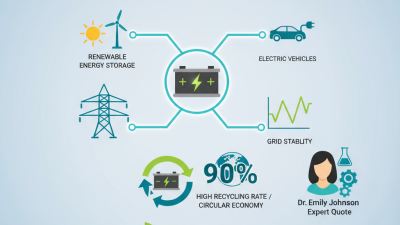
Another advantage to consider is their recycling efficiency. Lead acid batteries have a recycling rate of over 95%, according to the Battery Council International. This recycling capability not only reduces environmental impact but also conserves resources. However, some may argue about potential waste management issues. Mismanagement and improper disposal can lead to harmful environmental effects. It is crucial to be aware of proper disposal and recycling methods to mitigate these risks.
Tips: Invest in learning about proper battery disposal through local guidelines. This step helps the environment and encourages responsible use.
Lead acid batteries also perform well in extreme conditions. They can typically operate in temperatures as low as -20°C to as high as 50°C. However, temperature fluctuations can affect their efficiency. It's essential to monitor battery health regularly. Neglect might lead to diminished capacity and unexpected failures during critical times. Understanding these aspects can help users make informed choices for their power needs.
Comparative Analysis: Lead Acid vs. Other Battery Technologies
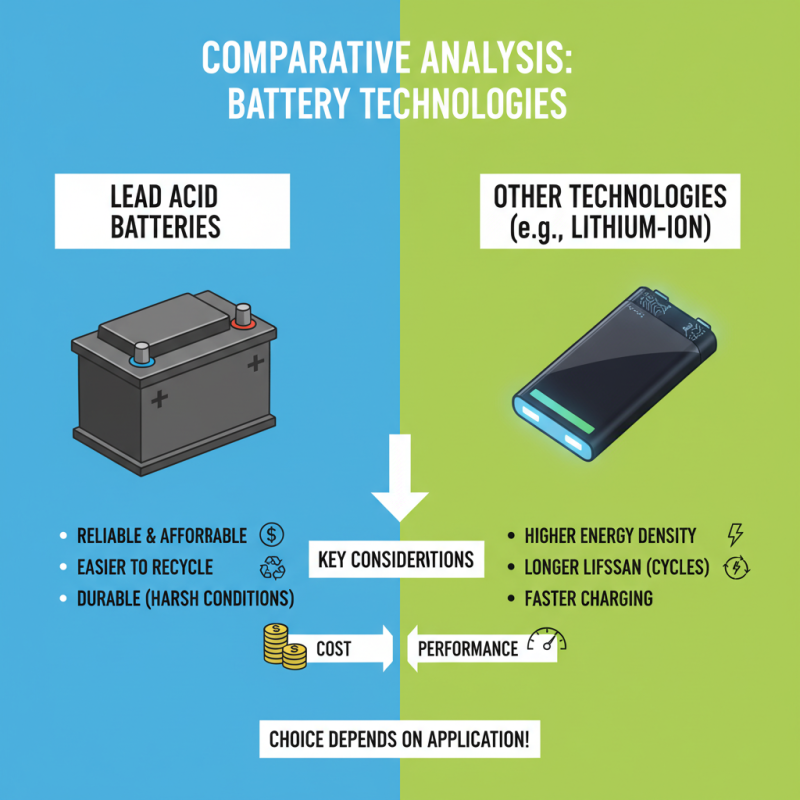
When considering battery technologies, lead acid batteries continue to hold an important place. They are known for their reliability and affordability, making them a top choice for various applications. Compared to lithium-ion batteries, lead acid options are often cheaper and simpler to recycle. Their robust construction also provides durability under harsh conditions.
However, while lead acid batteries are effective, they do have limitations. Their energy density is lower than that of newer technologies. This means they require more space for the same energy output. Additionally, they have a shorter cycle life, which can lead to higher long-term costs.
**Tips:** Prioritize your power needs before making a choice. Understand how often you will use the battery. Also, consider your budget and long-term goals. Regular maintenance can prolong the life of lead acid batteries. Proper charging practices are crucial. Always follow the manufacturer’s guidelines to avoid issues.
Common Uses of Lead Acid Batteries in Different Industries
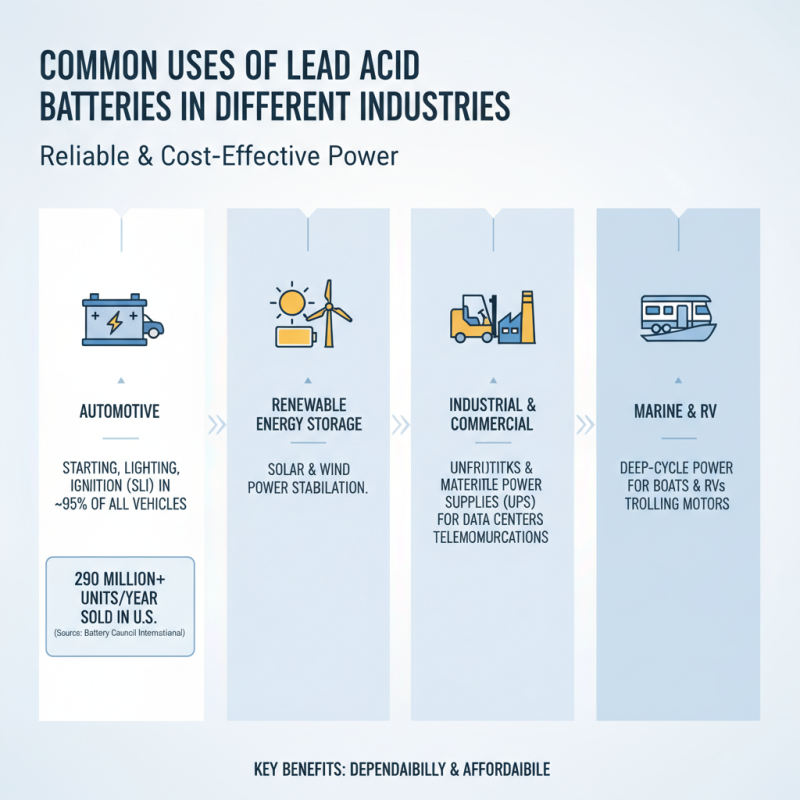
Lead acid batteries find common applications across various industries, primarily due to their reliability and cost-effectiveness. In the automotive sector, they power around 95% of all vehicles. According to the Battery Council International, approximately 290 million lead acid batteries are sold each year in the United States alone. This widespread use demonstrates their significance in starting, lighting, and ignition functions in vehicles.
In telecommunications, lead acid batteries serve as backup power systems. They ensure uninterrupted service during power outages. A report from Grand View Research indicates that the global telecom backup power market is projected to reach $7.9 billion by 2026. Such statistics highlight the critical role these batteries play in maintaining communication networks. However, the industry faces challenges regarding battery life and environmental impact.
Renewable energy systems also utilize lead acid batteries for energy storage. These batteries can store excess energy from solar panels. Data from the International Renewable Energy Agency suggests that the global energy storage market is growing rapidly, with lead acid batteries still being a dominant choice due to their established technology. This raises questions about their sustainability in a world increasingly focused on green solutions.
Factors to Consider When Selecting Lead Acid Batteries for Your Needs
When selecting lead acid batteries, various factors demand attention. First, the battery type matters.
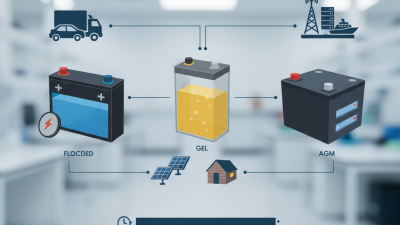
Flooded, AGM, and gel batteries all offer distinct advantages. For instance, AGM batteries tend to be
safer and more leak-proof. According to a study by the International Energy Agency (IEA), choosing the
right type can enhance battery life by up to 30%.
Another consideration is capacity, often measured in amp-hours (Ah). A higher capacity means
longer usage time. For example, a battery with a 100Ah capacity can power
a device for a more extended period. Knowing your energy requirements can prevent over-sizing or under-sizing, which leads to inefficient
usage. Industry reports indicate that an overly large battery can waste energy and increase costs by 15%
over time.
Lastly, consider the operating environment. Lead acid batteries perform well in various climates but may struggle in extreme temperatures.
The Battery Council International states that performance can drop by 20%
in cold settings. Ensure the selected battery can handle your specific conditions to avoid unexpected failures. Balancing these factors
creates a more reliable and effective power solution.